The 8 Life Domains You Should Track (Not Just Fitness)
Most people who decide to "get their life together" reach for the same lever: fitness. They download a workout app, count macros, and grind. And that is great — until they realize three months later that their body is sharper but their finances are a mess, their focus is shot, and they still feel hollow. The problem was never effort. It was scope. If you only track one part of your life, you only improve one part of your life. The real unlock is knowing the full set of life domains to track so progress in one area stops quietly leaking out of another.
This guide breaks down the eight domains worth measuring, why each one matters, and exactly what you can start tracking today. No spreadsheets required.
Why one domain is never enough
Your life is a system, not a single dial. Sleep affects focus. Focus affects money. Money affects stress. Stress affects your body. When you only watch one metric, you get tunnel vision — you optimize the thing you measure and neglect everything you don't. That is how someone ends up with a six-pack and a panic attack.
Tracking multiple domains does three things at once. It gives you an honest picture of where you actually stand. It catches problems early, before they snowball. And it turns vague self-improvement into something you can see, which is the difference between motivation that fades by Wednesday and momentum that compounds.
The 8 life domains to track
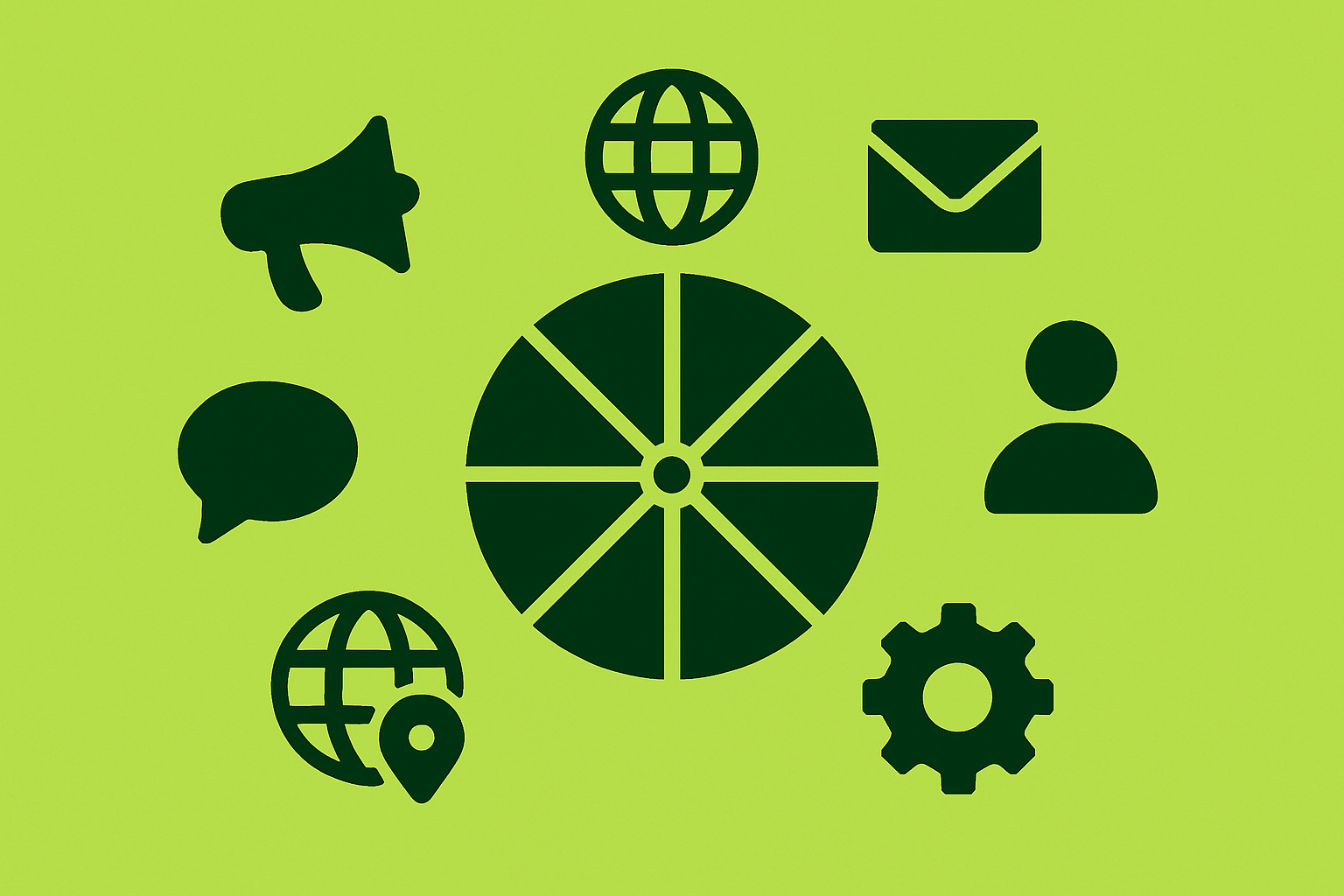
Here are the eight areas that, together, cover the vast majority of what people mean when they say they want to "level up." You don't have to perfect all of them at once — but you should at least be watching all of them.
1. Discipline
Discipline is the meta-domain — the one that powers every other. It is your ability to do the thing you said you'd do when you no longer feel like doing it. Track it directly: did you keep the promises you made to yourself today? A daily streak is the simplest, most honest scoreboard for discipline, because it rewards showing up over feeling inspired. If you want a deeper dive, our guide on how to build discipline goes further.
2. Focus
Attention is the new currency, and most of us are bankrupt. Focus is about how much of your day goes to deliberate, single-tasked work versus reactive, fragmented scrolling. Track it by counting your deep-work blocks, or simply by noticing how many times you reach for your phone out of boredom. If this is your weak spot, a structured dopamine detox plan can reset your baseline fast.
3. Body
Yes, fitness still counts — it's just one of eight, not the whole game. Body covers movement, nutrition, sleep, and energy. The mistake is tracking only the gym while ignoring the seven hours of sleep that actually drive your results. Track a daily movement minimum, your sleep window, and how you feel at 3 p.m. That last one is more diagnostic than any scale.
4. Money
Financial health is a domain people avoid because it feels abstract or shameful. It doesn't have to be. You don't need a finance degree — you need awareness. Track one number daily (did I spend with intention?) and one number weekly (am I saving anything?). Awareness alone changes behavior. You cannot improve a number you refuse to look at.
5. Purpose
Purpose is the "why" underneath everything else. It's the long-term project, craft, or mission you're building toward. Without it, the other seven domains feel like chores. Track it by asking a single question each day: did I move one inch toward something that matters to me? Even fifteen minutes on a meaningful project counts.
6. Mind
Mind covers your mental and emotional state — stress, mood, anxiety, gratitude, and the quiet conversation you have with yourself all day. This is the domain people are most tempted to skip and least able to afford skipping. Track it with a one-line journal: how did I actually feel today, and why? Patterns emerge within a week.
7. Relationships
You can win at fitness and money and still feel isolated. Relationships are a trainable domain too. Track whether you reached out, showed up, or deepened a connection today — a text to a friend, a real conversation, time given without your phone in your hand. Connection rarely shows up in productivity apps, which is exactly why it gets neglected.
8. Growth
Growth is deliberate learning — reading, a new skill, a course, reflection that turns experience into wisdom. It's the difference between living the same year thirty times and actually compounding. Track it by capturing one thing you learned each day. Small, but over a month it's a different person.
How to actually track all eight without burning out
The reason most people never track more than one domain is friction. Eight spreadsheets is a recipe for quitting by day four. Here is how to keep it sustainable:
- Pick one daily action per domain. Not a system — a single, concrete, do-it-or-don't action. "Move 20 minutes," not "get fit."
- Make it binary. Did you do it, yes or no? Binary tracking removes the overthinking that kills consistency.
- Require proof, not vibes. It is far too easy to check a box you didn't earn. Attaching a photo or a quick note to each action keeps you honest with the one person it's tempting to lie to: yourself.
- Protect a streak. A visible chain of consistent days is the single strongest behavioral lever you have. You'll do things to protect a streak that you'd never do for "discipline" in the abstract.
- Make it finite. "Forever" is exhausting. A defined window — say, 30 days — turns an overwhelming life overhaul into a sprint you can actually see the end of.
Where LifeMaxx fits in
Everything above can be done with a notebook, and if that's your style, do it. But the friction usually wins. LifeMaxx was built specifically to solve the multi-domain tracking problem without turning your life into admin work. It's a gamified 30-day life reset for iPhone, and it maps almost exactly onto the domains in this guide.
Instead of an endless to-do list, LifeMaxx gives you one focused 30-day arc — a clear beginning and a clear end — with daily quests across eight life domains, not just fitness. Every quest requires real proof: you attach a photo and a journal entry, so there are no fake check-offs and no lying to yourself. You earn XP, level up from "Dormant" toward "Legendary," and build a streak you'll genuinely fight to protect. There are ranks, badges, and a global leaderboard if competition is your fuel.
The honest pitch is simple: it's designed to replace doomscrolling with a daily ritual. The same thumb that opens an infinite feed can open a quest instead. If gamifying the process appeals to you, our piece on how to gamify your habits explains the psychology, and the 30-day life reset guide walks through the full arc.
Start small, track wide
You do not need to master all eight domains this month. You just need to stop pretending the other seven don't exist. The whole point of choosing the right life domains to track is balance: a life that's strong across the board beats a life that's elite in one corner and collapsing everywhere else.
Pick one action per domain. Make it binary. Demand proof. Protect your streak for 30 days. Then look back at who you've become. For more on building momentum that lasts, browse the rest of the blog — there's a full glow-up checklist and a guide on how to beat doomscrolling waiting for you.
Ready to stop tracking one thing and start tracking your whole life? Download LifeMaxx free and begin your 30-day reset today — one focused arc, eight domains, real proof, and a streak worth protecting.
Ready to start your 30-day reset?
LifeMaxx turns your next 30 days into a game you actually want to win — daily quests, XP, streaks, and real proof.
Get LifeMaxx